Mechanics
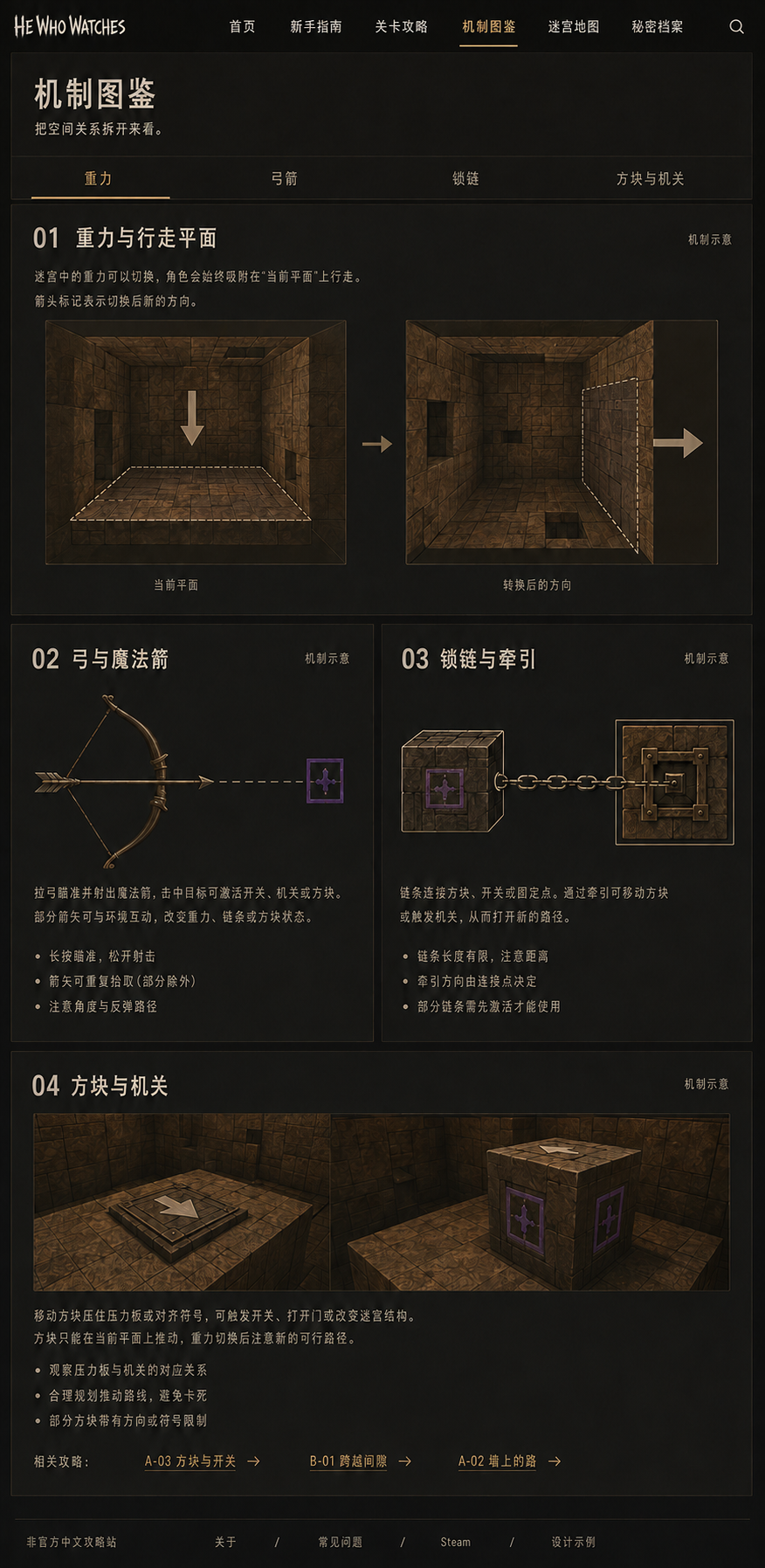
The bow is a puzzle tool. Your standing surface, the arrow's target and a block's movement are separate things to track.
01Gravity and perspective
Keep landmarks and surface identities stable as your viewpoint changes, and diagnose spatial confusion through small, observable transitions.
02Bow
Plan the purpose, approach, and consequence of each bow interaction while separating verified behavior from untested assumptions.
Your intention is what you want the room to become. The action is the interaction you attempt. The result is what actually changes. These three things are easy to collapse into one story: “I shot the target to open the route, therefore the route should be open.” A better record says that you intended access, attempted a particular interaction from a particular position, and observed a particular change. That record leaves room for the possibility that the action succeeded while the larger intention did not.
Read guide ↗03Chain
Evaluate departure conditions, expected arrival, and the next useful action when planning chain-assisted traversal across gaps.
Break a proposed crossing into departure, interaction, arrival, and continuation. Departure describes where you begin and what access you currently have. Interaction identifies the target and the action you intend. Arrival describes the position you expect afterward. Continuation names the next useful thing you can do from there. If you can explain only the first two, you have a traversal experiment rather than a complete plan. That is acceptable, provided you know what the experiment should teach you.
Read guide ↗04Blocks and switches
Build a dependency-based plan for objects and switches, preserve interaction access, and distinguish placement from construction order.
Check what holds a switch and which object is free to move.
Read guide ↗Concept illustration from the site design; not an in-game screenshot.