Walkthroughs · 01
Read guideApollo hints: transfer the Elevator III idea
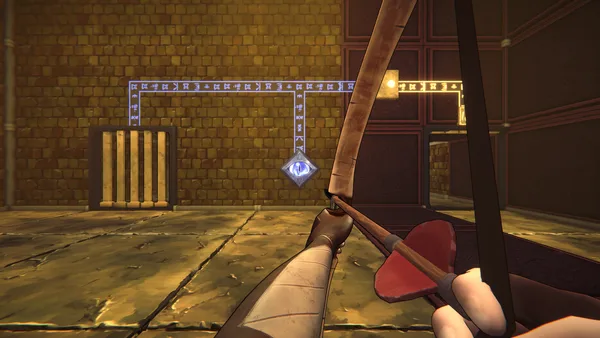
Understand the developer’s Elevator III comparison without inventing a camera-dependent Apollo walkthrough.
Results: 30
Understand the developer’s Elevator III comparison without inventing a camera-dependent Apollo walkthrough.
Distinguish a blocked plan from a suspected malfunction, preserve required access, and verify recovery options without invented shortcuts.
Learn a practical first-session routine for orientation, careful experiments, bow interactions, and useful hints without level spoilers.
Build a dependency-based plan for objects and switches, preserve interaction access, and distinguish placement from construction order.
Plan the purpose, approach, and consequence of each bow interaction while separating verified behavior from untested assumptions.
Evaluate departure conditions, expected arrival, and the next useful action when planning chain-assisted traversal across gaps.
Evaluate supported inputs and advertised accessibility options through a personal setup process, without assuming unverified bindings or settings.
A practical report workflow for crashes, restarts, and repeatable failures, with the developer’s Low-graphics suggestion clearly separated from general Steam checks.
Why older demo advice can fail, which release changes are documented, and how to compare guides without assuming that secrets, saves, or routes transfer unchanged.
Use the developer’s gate-and-block method, with layered clues and troubleshooting for the final ride.
A developer-sourced explanation of the welded-block drop that opens access to the lower puzzle entrances.
A developer-confirmed starting point for garden exploration, followed by an original method for mapping observations without brute force or fabricated routes.
A source-aware hint ladder for Gemini, focused on transferring the Gravity Storage idea into a complete ride.
Keep landmarks and surface identities stable as your viewpoint changes, and diagnose spatial confusion through small, observable transitions.
A preparation guide separating required knowledge, optional secrets and the developer’s references for Gemini, Mercury and Apollo.
A careful explanation of the one-direction restraint suggested for Lock, with a diagnostic framework rather than invented placements.
Developer-sourced Mercury hints with an honest boundary between the known clue and unverified route details.
The developer-recommended recovery for the reported overlay movement issue, followed by focused input diagnosis.
What the developer said about Low graphics, how to compare hub performance fairly, and what to record when stutters remain.
Current Windows and macOS listings, the difference between controller and console support, and a careful installation checklist that preserves unresolved compatibility questions.
Extract an interaction or dependency from playable guidance, map its role to the main room, and preserve a spoiler-light learning experience.
Survey geometry, interactions, states, and goals separately so a complex room becomes a sequence of testable questions.
A community-sourced four-eye clue, with object inventory, coverage checks and clear limits on unverified locations.
What the first announced post-launch patch changes, how to compare older guides, and how to report a genuine mismatch without assuming your save is broken.
Create compact notes for landmarks, conditional observations, hypotheses, dependencies, hints, and returning after a break.
An attributed introduction to the community decoding, with original transcription and cross-checking methods rather than a copied alphabet chart or late-game answer.
A spoiler-marked guide to examining the Stability route clue, keeping orientation straight, and checking community evidence without inventing a solved path.
Developer hints and carefully attributed community findings for investigating He Who Watches’ torch secrets.
An attributed community method for the Transport torch, with careful cue tracking and orientation checks.
Verified creator and video links, organized by the published community index, with clear coverage limits and a practical way to use recordings without unnecessary spoilers.
No matching guides. Try a chamber name or a mechanic.